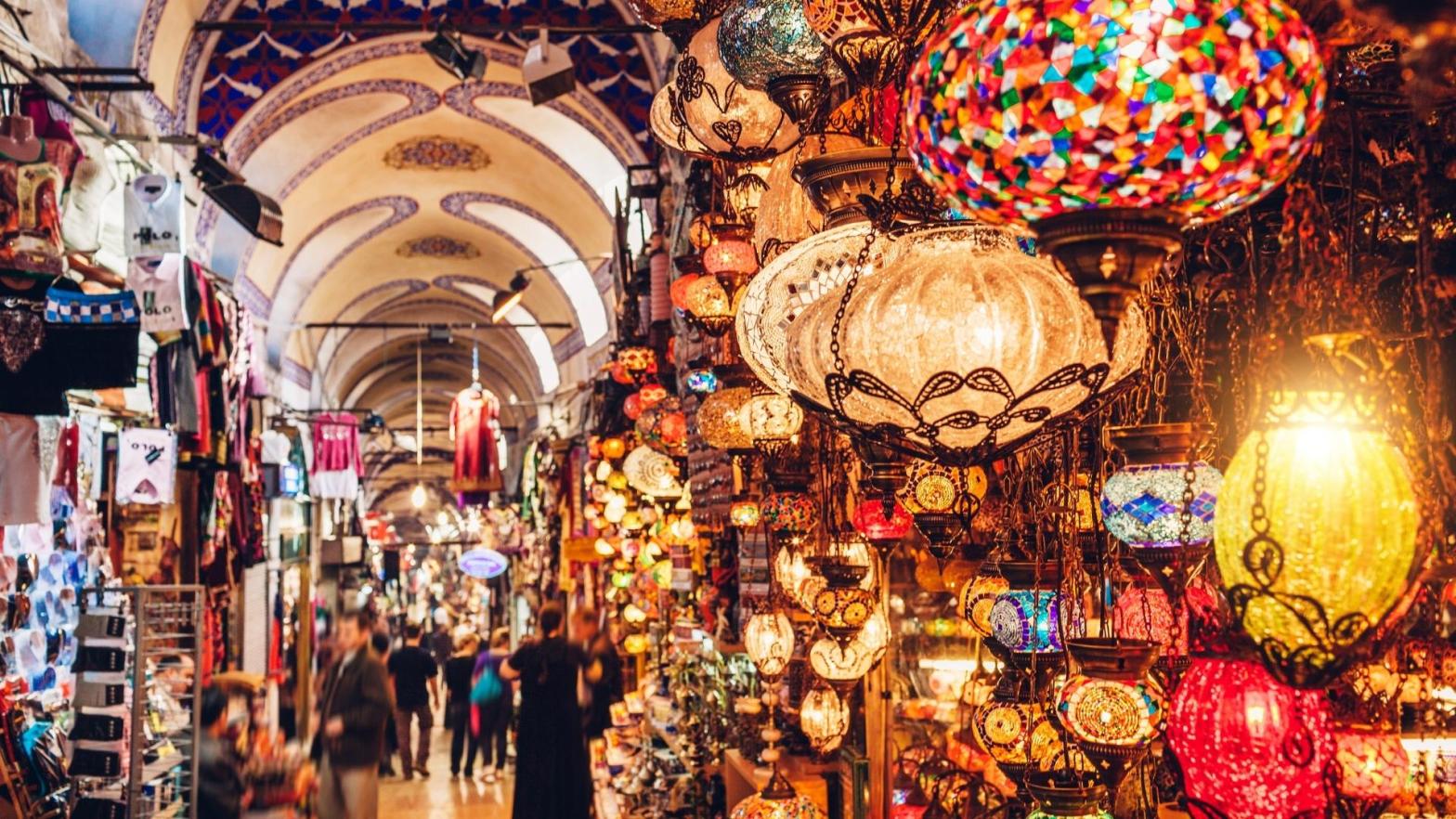
Istanbul, a city that has stood as a crossroads for various cultures throughout history, is a symbol of trade, art, and commerce. Two of the most vivid representations of this rich cultural and commercial life are undoubtedly the Grand Bazaar and the Spice Bazaar. These marketplaces are not only centers for shopping but also landmarks that reflect the deep history and cultural heritage of Istanbul.
The Grand Bazaar: A Historic Labyrinth in the Heart of Istanbul
Built in 1455, the Grand Bazaar symbolizes the grandeur and commercial power of the Ottoman Empire. With around 4,000 shops and 61 covered streets, it holds the title of the largest and oldest covered bazaar in the world. The Bazaar has mesmerized locals and travelers alike for centuries.
As you step into the Grand Bazaar, you are immediately enveloped by an atmosphere of vibrant colors, scents, and sounds. Here, you can find everything from gold jewelry and handmade carpets to leather goods and antiques. Especially, Turkish rugs, silver craftsmanship, and handmade ceramics stand out, representing the bazaar’s fusion of art and commerce.
One of the most enchanting aspects of the Grand Bazaar is the bargaining culture. This tradition, combined with Turkish hospitality, makes the shopping experience all the more enjoyable. Beyond just shopping, visitors encounter history at every corner. Notable areas like the Cevahir Bedesten and Sandal Bedesten continue to captivate as key historical trade centers.
The Spice Bazaar: A Fragrant Journey Through History
A short walk from the Grand Bazaar lies the Spice Bazaar, which was built in 1660 and remains another historic treasure of Istanbul. Also known as the “Egyptian Bazaar,” it derives its name from the exotic spices and goods brought in from Egypt. Upon entering, you are greeted by the mesmerizing aroma of spices, making the market a sensory feast.
The Spice Bazaar offers a wide variety of Turkish spices, dried fruits, herbs, teas, and natural products. Visitors are especially drawn to traditional goods such as saffron, sumac, and Turkish delight. But the experience here goes beyond shopping; conversations with the shopkeepers provide insight into Istanbul’s deep-rooted cultural history.
With its proximity to the Yeni Camii (New Mosque), the Spice Bazaar is not only a shopping destination but also a cultural experience that ties together Istanbul’s Ottoman past and vibrant present.
What Do These Two Bazaars Have in Common?
Despite their different histories and structures, the Grand Bazaar and Spice Bazaar share a common essence: they reflect the soul of Istanbul. Both bazaars are vibrant hubs where trade and culture have thrived for centuries. Each corner and each shop tells a story of Istanbul’s rich history.
If you’re exploring Istanbul, a visit to these two bazaars is a must. Getting lost in the Grand Bazaar’s enchanting labyrinth and wandering through the colorful stalls of the Spice Bazaar are some of the best ways to truly feel the pulse of this magnificent city.
 WALKS TURKEY